
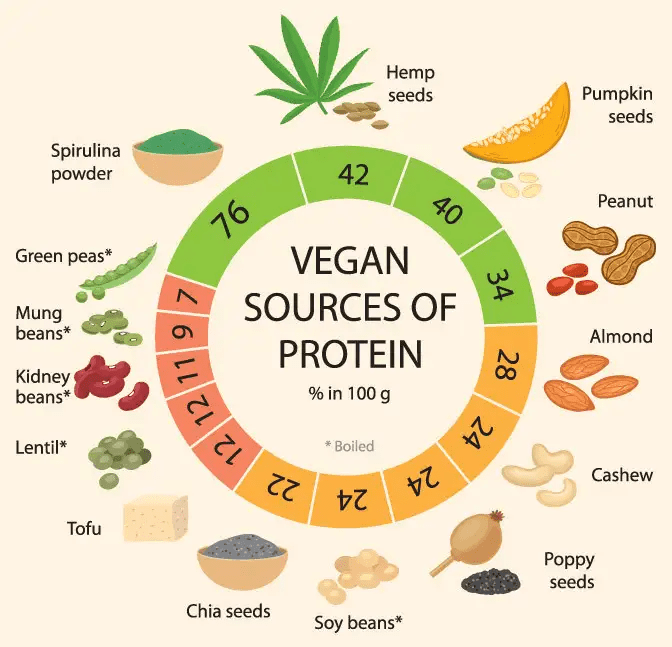
You think you can’t meet your protein needs as a vegetarian?
Regardless of whether you’re looking to gain muscle, lose fat, or simply maintain your health, protein is essential. And no, you don’t have to consume chicken to get it.
Power Proteins: The Heavy Hitters (15g–46g/100g)
These are the crème de la crème protein sources for vegetarians: small, nutrient-dense, and ideal for high-protein dishes.
- Nutritional Yeast (Dry) – 46g protein Vegan wizardry. Cheesy, nutty, and FULL of B12, zinc, and fiber. Sprinkle on pasta, popcorn, or salads.
- Peanuts & Natural Peanut Butter – 25g Cheap and calorie-rich. Use sparingly! Excellent in oats, shakes, or sandwiches.
- Almonds – 21g Convenient, heart-healthy, and great for munching on. Bonus: Vitamin E-packed.
- Pumpkin Seeds – 19g Crispy seeds that are great as a smoothie or yogurt bowl topper.
- Tempeh – 19g Tofu’s fermented, protein-laden relative. Great for gut health and BBQs.
Desi Staples: Tofu, Paneer & Legumes (8g–18g/100g)
Traditional protein-dense Indian and Asian foods that are convenient to prepare and incredibly gratifying.
- Paneer (Cow Milk) – 18g The original Indian protein. Grill, cube, or toss in curry.
- Tofu (Firm) – 12g Absorbs flavor like a sponge. Stir-fry, grill, or air-fry.
- Soybeans (Boiled) – 16.6g Whole soybeans deliver a wallop of protein and fiber.
- Edamame (Boiled) – 11g Perfect as a snack or side dish.
- Lentils (Cooked) – 9g Think dal. One bowl = protein + fiber + comfort.
- Rajma (Kidney Beans) – 8.7g Rajma chawal = protein-packed soul food.
- Chickpeas (Cooked) – 8.9g Hummus, salads, or chole — always a meal-prep win.
Seeds & Superfoods (17g–3g/100g)
Small, mighty, and full of plant protein, fiber, and healthy fats.
- Flaxseeds – 18g
Good for digestion and hormones. Mix in smoothies or rotis.
- Chia Seeds – 17g
Expand in water and provide a fiber + protein lift. Make puddings or add to oatmeal.
- Makhana (Roasted) – 9.7g
Low calorie, high protein, and wonderful for Indian-style snacking.
Daily Add-ins: Grains, Vegetables & Dairy (3g–10g/100g)
They are supporting actors — not ridiculously high in protein, but great for supplementing your meals.
- Greek Yogurt (Plain, Low-Fat) – 10g Super high in protein and beneficial for gut health. Serve as a dip or snack.
- Milk (Cow, 2%) – 3.4g Timeless source of complete protein and calcium.
- Broccoli (Cooked) – 2.8g
Nutrient-rich and good in stir-fries.
- Mushrooms – 3.1g Provide umami and a bit of protein. Sauté or grill.
- Spinach (Cooked) – 2.9g Iron-rich and goes well with paneer.
- Quinoa (Cooked) – 4.4g A complete protein grain that’s hard to find.
- Buckwheat (Cooked) – 5g Gluten-free and with high antioxidants.
- Amaranth (Cooked) – 3.8g Ancient Indian grain with hidden protein.
The Shock Factor: Nutritional Yeast (Again) – 46g/100g
Yep — it needs its own feature.
It’s not only the highest vegetarian protein on the list, it’s also:
✅ Vegan
✅ Packed with Vitamin B12 (a rarity in plant foods)
✅ Rich in fiber & minerals
✅ Low in fat
✅ Has a cheesy, umami taste without using actual cheese
Sprinkle it on everything: popcorn, pasta, soups, veggies, salads.
One tablespoon = power punch
Eating sufficient protein as a vegetarian is not only possible — it’s simple with the right foods.
Just pair and match:
- Tempeh + Quinoa Bowl
- Chickpea Salad with Pumpkin Seeds
- Tofu Stir Fry + Spinach + Brown Rice
- Greek Yogurt + Chia + Almonds
No dull meals, no sacrifices — just intelligent eating.
Your journey to health starts here
 Chubby to Chiseled